1Likes 1Likes
-
 1
Post By Wheelie
1
Post By Wheelie
 |

22 Sep 2012
|
|
Gold Member
Veteran HUBBer
|
|
Join Date: Oct 2005
Location: Oslo, Norway
Posts: 658
|
|
|
Your best innertube and tire repair tips
If you have any tips related to repairing tire carcases, plugging holes, repairing innertubes, repairing valves, bodging it, special parts or tools, great suppliers, prefferred kits, etc - please share them here.
For instance, if you know where to get a valve patch for motorcycle innertubes, I would really like to know about them. The same goes for radial-, cross ply- or uni-patches to repair tears in the carcas itself. I've come up short trying to find a shop that carry all these items.
My own tips would be:
- -Allways leave with new rubber on a big trip, both tire and tubes - even the spare tubes should be newish - rubber does have an expiration date
- -When replacing a tube, keep the valve stem and the nuts from the old as a spare
- -If you don't have a valve patch with a stem for repairing your inner tube, cut one out of an old tube and put it in your repair kit
- -Carry an extra valve cap from an old tube/tire - it is an integral part of the system and is easily lost
- -If you lack a large patch, cut one out of an old tube
- -Check the condition of your glue tubes before you leave. If they are more than a few years, replace it. If it has been opened, replace it. If it is hard, replace it
- -Check the condition of your supply patches before going on a big trip
- -Leave with several tubes of fresh unopened tubes of glue. I always carry at least three and restock as I open them. Mark new ones with year of purchase.
- -Carry many patches of various sizes (2-3 repair kits), plus a couple of larger patches
- -Make certain the inside of the rim is free of corrosion before you leave on a big trip. Any corosion should be sanded smooth and painted with a rust inhibitor
- -Make sure that the inner rim/spoke protector rubber band is intact and in good condition. Gaffa or electrical tape is great stuff. Motion Pro sells a tape/band that is even better
- -Store spare tubes and repair kits so that it doesn't chaff from vibrations - i.e. wrap them in a rag. Protect them from chemicals, puncture, pinching, pressure, etc...
- -Carry a small piece of chalk in your repair kit to mark holes or the old tire's placement in relation to the valve (for rebalancing purposes)
My procedure:
Before repairing a tube - inspect the tire thoroughly and remove any foreign objects that may have caused or contributed to the puncture - carry out repairs to the carcas as necessary.
If you have a spare tube, use this one and repair the punctured first chance you got and use this as your future spare. It is allways nicer to fix this in a hotel than on the road anyways.
When repairing a tube - inflate the tube to find the hole(s). If you can submerge it under water, then perfect. If you can't, then soapy water or even spit can do the job. Put the tube to your ear and listen for leaks, and use the more sensitive back of your hand to feel for leaks. While you are at it, check the valve seating in the tube as well as the valve stem and valve core as these are prone to leak - especially if you have been riding with a flat - I find that spit arround the stem seating and inside the valve does the trick. I learned the hard way, repaired a puncture, but failed to notice that there was a tiny leak at the seat of the valve until after the tire had come back on the bike
Mark the holes in the tube and the tire with your chalk before attempting a repair
Clean (if necessary - oil and glue doesn't mix well), then Sand/rough up the area arround the hole until the tube looses its shinyness. And, make sure that this area is larger than the patch you are to use.
Apply plenty of glue to the tube, in an area larger than the patch. Let it dry until it feels tacky but not wet. Do not check this where the patch is to sit, but outside the patch (hence the importance of making the glue area quite a bit larger than the patch.
Remove the backing of the patch, but leave the plastic on the front still on. Apply the patch. Use a hard rounded object, lik the edge of a tire iron, to knead the patch back and forth, criss cross, to work the patch into the tube. When the plastic on the front of the patch is coming off, the tube and patch is vulcanized. Peal off the plastic off the patch. For an extra measure, I allways add a little extra glue arround the patches edge after it is fixed in place - smoothening it out with my finger
Let tube and glue dry for 20 minutes before attempting to inflate air into it
Check the repaired tube for leaks now by inflating it with the same steps above - before you put it into the tire! Remember to deflate it before putting it into the tire.
|
22 Sep 2012
|
|
Gold Member
Veteran HUBBer
|
|
Join Date: Oct 2005
Location: Oslo, Norway
Posts: 658
|
|
Search and you shall find, or so Grant says.
Shortly after making my first post, I found this shop in Australia and placed an order - seems like a pretty comprehensive kit:
Tyrepliers Engineering - Puncture Repair Kits

This kit contains: - 1 x Stitching Tool
- 6 x 32mm Round Tube Patches
- 6 x 43 mm Round Tube Patches
- 6 x 57mm Round Tube Patches
- 1x Valve Extension 90deg
- 1 x Vulcanising Valve Tube M/cycle
- 2 x 10cc Vulcanising Cement
- 1 x Chalk
- 2 x Tyre Valve
- 1 x Valve Cap With Valve Removing Tool
How cool is that????
|
22 Sep 2012
|
|
Registered Users
Veteran HUBBer
|
|
Join Date: Apr 2008
Location: BC, sometimes
Posts: 578
|
|
|
Great tips guys - thanks.
|
22 Sep 2012
|
 |
Large Golden Member
Veteran HUBBer
|
|
Join Date: Aug 2005
Location: BC, Canada
Posts: 1,085
|
|
That's very comprehensive list .
My only comments would be to take 3 tyre levers , makes the job so much easier .
A piece of old tyre sidewall or a piece of plastic cut from an oil container can cover up a slit in a sidewall or a hole in the treaded part of the tyre so that you can limp to the nearest town .
Oh - and don't forget a small roll of emery cloth/sandpaper . 
__________________
Blessed are the cracked, for they let in the light. - Spike Milligan
"When you come to a fork in the road ,take it ! When you come to a spoon in the road ,take that also ."
|
22 Sep 2012
|
|
Registered Users
Veteran HUBBer
|
|
Join Date: Feb 2006
Posts: 1,598
|
|
|
For patches go to an agricultural merchants, they will have all sizes.
when fitting tube, dust the tube and the inside of the tyre with talcum powder.this will prevent the tube from chafing.
|
25 Sep 2012
|
 |
Registered Users
Veteran HUBBer
|
|
Join Date: Oct 2008
Location: West Wales, UK
Posts: 753
|
|
|
Very small leaks can often be found by passing the tube in front of your open eye. The eye is more sensitive to the cold air than the back of your hand. I have found leaks this way that were completely hidden otherwise. Putting the tube in a bucket of water is the best way, but you don't always have a bucket, and getting the tube properly dry afterwards is always a hassle.
|
25 Sep 2012
|
|
Registered Users
Veteran HUBBer
|
|
Join Date: Apr 2008
Location: Cyprus
Posts: 168
|
|
|
It is OK to fit a front tube in a rear tyre but very difficult to fit a rear tube in a front tyre.
|
26 Sep 2012
|
|
Registered Users
HUBB regular
|
|
Join Date: Jan 2011
Location: Melbourne, AUS
Posts: 73
|
|
|
Now here's a super n00b question:
What if the leak is at the base of the valve stem so you can't put a flat patch on it?
I see in that 'kit' above there is something that looks like a new valve stem with a patch. Do you cut out the old stem and patch it with that?
|
26 Sep 2012
|
|
Registered Users
Veteran HUBBer
|
|
Join Date: Mar 2007
Location: Brisbane Australia
Posts: 193
|
|
|
My best tip would be to be patient.
Wait for the glue to become almost dry before placing the patch.
If you put the patch on while the glue is still wet itr will not stick properly. Needs to be very tacky.
|
26 Sep 2012
|
|
Registered Users
Veteran HUBBer
|
|
Join Date: Aug 2008
Location: NFA
Posts: 222
|
|
|
Make sure your glue is good and works under extreme conditions, or carry a previously patched tube as back up.....Slime Glue failed big time this year in Kazakhstan. Wouldn't set, despite being for all conditions, so we eventually used glue from a bicycle repair kit, which got us to the next town. And use heavy duty tubes and gaffer tape the inside of the rims ( spoked wheels) prior to setting off. Gives an extra bit of resistance to persistent thorns etc
|
27 Sep 2012
|
|
Registered Users
Veteran HUBBer
|
|
Join Date: Oct 2008
Location: West Wales, UK
Posts: 753
|
|
Quote:
Originally Posted by nicola_a

What if the leak is at the base of the valve stem so you can't put a flat patch on it? I see in that 'kit' above there is something that looks like a new valve stem with a patch. Do you cut out the old stem and patch it with that?
|
That's about it. Pinch the tube up, cut round the old valve and put the new one in like a patch. The key is to cut out as little as possible to leave plenty of tube for the new valve to stick to.
|
|
Currently Active Users Viewing This Thread: 1 (0 Registered Users and/or Members and 1 guests)
|
|
|
| Thread Tools |
|
|
| Display Modes |
 Linear Mode Linear Mode
|
 Posting Rules
|
You may not post new threads
You may not post replies
You may not post attachments
You may not edit your posts
HTML code is Off
|
|
|
|

Check the RAW segments; Grant, your HU host is on every month!
Episodes below to listen to while you, err, pretend to do something or other...
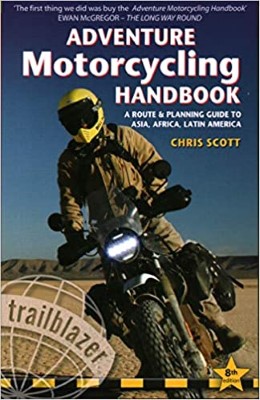
2020 Edition of Chris Scott's Adventure Motorcycling Handbook.
"Ultimate global guide for red-blooded bikers planning overseas exploration. Covers choice & preparation of best bike, shipping overseas, baggage design, riding techniques, travel health, visas, documentation, safety and useful addresses." Recommended. (Grant)

Ripcord Rescue Travel Insurance™ combines into a single integrated program the best evacuation and rescue with the premier travel insurance coverages designed for adventurers.
Led by special operations veterans, Stanford Medicine affiliated physicians, paramedics and other travel experts, Ripcord is perfect for adventure seekers, climbers, skiers, sports enthusiasts, hunters, international travelers, humanitarian efforts, expeditions and more.
Ripcord travel protection is now available for ALL nationalities, and travel is covered on motorcycles of all sizes!
What others say about HU...
"This site is the BIBLE for international bike travelers." Greg, Australia
"Thank you! The web site, The travels, The insight, The inspiration, Everything, just thanks." Colin, UK
"My friend and I are planning a trip from Singapore to England... We found (the HU) site invaluable as an aid to planning and have based a lot of our purchases (bikes, riding gear, etc.) on what we have learned from this site." Phil, Australia
"I for one always had an adventurous spirit, but you and Susan lit the fire for my trip and I'll be forever grateful for what you two do to inspire others to just do it." Brent, USA
"Your website is a mecca of valuable information and the (video) series is informative, entertaining, and inspiring!" Jennifer, Canada
"Your worldwide organisation and events are the Go To places to for all serious touring and aspiring touring bikers." Trevor, South Africa
"This is the answer to all my questions." Haydn, Australia
"Keep going the excellent work you are doing for Horizons Unlimited - I love it!" Thomas, Germany
Lots more comments here!

Diaries of a compulsive traveller
by Graham Field
Book, eBook, Audiobook
"A compelling, honest, inspiring and entertaining writing style with a built-in feel-good factor" Get them NOW from the authors' website and Amazon.com, Amazon.ca, Amazon.co.uk.
Back Road Map Books and Backroad GPS Maps for all of Canada - a must have!
New to Horizons Unlimited?
New to motorcycle travelling? New to the HU site? Confused? Too many options? It's really very simple - just 4 easy steps!
Horizons Unlimited was founded in 1997 by Grant and Susan Johnson following their journey around the world on a BMW R80G/S.
 Read more about Grant & Susan's story
Membership - help keep us going!
Horizons Unlimited is not a big multi-national company, just two people who love motorcycle travel and have grown what started as a hobby in 1997 into a full time job (usually 8-10 hours per day and 7 days a week) and a labour of love. To keep it going and a roof over our heads, we run events all over the world with the help of volunteers; we sell inspirational and informative DVDs; we have a few selected advertisers; and we make a small amount from memberships.
You don't have to be a Member to come to an HU meeting, access the website, or ask questions on the HUBB. What you get for your membership contribution is our sincere gratitude, good karma and knowing that you're helping to keep the motorcycle travel dream alive. Contributing Members and Gold Members do get additional features on the HUBB. Here's a list of all the Member benefits on the HUBB.
|
|
|