 9Likes 9Likes
 |
|

21 Nov 2010
|
|
Registered Users
HUBB regular
|
|
Join Date: Nov 2010
Location: serbia
Posts: 35
|
|
|
traveling with dogs in africa
hello, i am planing to go with my two dogs to africa driweing my camper. somebody knows if there is anny particular medical rules about dogs and do i need to have NOC (no objection certificate) for my dogs on entering countrys in africa. for marocco i know no need, i was already with my dog once. some info?? thanks, svetlana
|
24 Nov 2010
|
 |
Registered Users
Veteran HUBBer
|
|
Join Date: Jan 2010
Location: England
Posts: 437
|
|
Quote:
Originally Posted by ChrisC

First and foremost you need knowledge
What to do
when
How to use the First Aid kit you have to hand/don't have - improvise!
depending on the situation, most people will only just cope with a FA Kit, without they would/will be stuck, and will not have the knowledge, thought process to improvise sufficiently.
It ALL depends on the knowledge you have - level of training
Where you are in the world, and how likely you are to getting to trained help. If say in the middle of nowhere in Africa then the better the knowledge and kit, will make a massive difference. In the UK the first 10-30 mins in an Urban area, and upto 2 hours in a rural/far from help situ, after that the Paramedics will be there - fingers crossed!
ChrisC
|
Mate as an ex serviceman & a Paramedic, If I took all the things I thought I 'might need' I would not have room for items i would need!, I.E. suture set I would take, you unless knew how to use would not, I would take coagulant crystals, most people would not.
like others suggest do a basic first aid course, if you work in a office then you office would have dedicated first aiders, ask if you can become 1 that way you get to do a first aid course for free or contact st johns amb service. and pay to do it whear as doing the office option means you get to possibly help work mates.
__________________
We are the Pilgrims, Master, we shall go Always a little further: it may be beyond that last blue mountain barred with snow, Across that angry or that glimmering sea.
|
22 Jul 2011
|
 |
Registered Users
HUBB regular
|
|
Join Date: Mar 2008
Location: South Africa
Posts: 91
|
|
|
Medical kit & tips, 2 people, 1 year in Africa
Hi folks
Just finished a 12 month trip from London to Cape Town via west and central Africa. We have posted a summary of our medical kit and hygiene tips, how we used the kit and what we actually treated on the trip.
You can read the full article here
HTH
Nick
|
6 Aug 2011
|
|
Registered Users
New on the HUBB
|
|
Join Date: Aug 2011
Posts: 1
|
|
 Re :
Re :
Hi,
I always keep tablets like metacin for fever and Dramamine for vomit.In addition to first aid kit,i always prefer to keep fruits with me it keeps me refreshing.
|
26 Aug 2011
|
|
Gold Member
Veteran HUBBer
|
|
Join Date: Feb 2011
Location: In Ireland, Working to save for the next trip
Posts: 291
|
|
|
The best thing you can bring is your brain.
I did a first aid course a few years back, and my wife and I decided to do a wilderness first aid course as our trips are usually well off the beaten (or driven) track. It was superb! way better than a "regular" first aid. It goes through what to do for problems where your not expecting professional help for many hours or even days. For the sake of a few quid and a couple of days, this is a super course to do.
As to what to bring, that depends on how many in the group.... 20 folks will get through a lot of plasters :-)
at a minimum, 1 roll of sterile gauze, 1 compression bandage, VERY good sissors (knife if you have to). cling film. good few sterile gloves. loads of clean water. That's it. any more bandages / slings / splints are made on the spot from whatever is around. after that, it's stuff that's medical, but not first aid - tablets for shits, re-hydration powders/drinks, anti-malaria etc.
but the most important - do a course, ideally a wilderness/remote one.
Great if you dont need any of this, but you could easily come across anyone from this group, dying for the want of some help....
Merv.
|
26 Aug 2011
|
 |
Gold Member
Veteran HUBBer
|
|
Join Date: Aug 2008
Location: Alcester UK & Idilevo, Bulgaria
Posts: 329
|
|
|
I like to carry a very small dental kit - enough to do a temporary filling. Toothache one of my pet hates. Broke a tooth in Siberia in July but luckily the root died of its own accord and I had no pain - lucky me !
|
13 Sep 2011
|
|
Registered Users
New on the HUBB
|
|
Join Date: Sep 2011
Posts: 7
|
|
|
Where there is no doctor
A good tip is to bring the book called ' Where there is no doctor ' a proven publication printed over 3 million copies dealing on basical medical subjects and tropical medicine in particular. It it is extensively illustrated as well.
good travels,
Michiel (MD)
|
13 Sep 2011
|
|
Registered Users
HUBB regular
|
|
Join Date: Aug 2009
Location: Belgium
Posts: 50
|
|
Quote:
Originally Posted by Michielvv
A good tip is to bring the book called ' Where there is no doctor ' a proven publication printed over 3 million copies dealing on basical medical subjects and tropical medicine in particular. It it is extensively illustrated as well.
good travels,
Michiel (MD)
|
There is a free download : http://weblife.org/pdf/where_there_is_no_doctor.pdf
__________________
R 1200 GS '08 en G 650 X Challenge '08
|
10 Nov 2011
|
|
Registered Users
New on the HUBB
|
|
Join Date: Feb 2011
Location: UNITED KINGDOM
Posts: 16
|
|
If toothache is a fear take a small bottle of clove oil. dab a little on your finger tip and rub on effected area. Works like a dream and is the basis to lots of top dental products. If anyone is passing through Pemba (north of Zanzibar ) pop in and ask to look around. Fascinating place. 
|
25 Dec 2011
|
|
Registered Users
New on the HUBB
|
|
Join Date: May 2011
Posts: 17
|
|
|
+1 on knowledge as the key thing as you can improvise a great deal of things with a bit of ingenuity.
It's also very important to work out what you'll REALLY need, rather than a general kit sold to cover the 'average' trip.
Tooling around in Sierra Leone and Liberia I realised that a lot of 'First Aid' gear is great if an ambulance is on the way, but if you're 3 days drive down a dirt road from an overcrowded, understaffed UN hospital where all they will do is possibly help you get on a helicopter then it may not be much use to be kept alive for that extra hour.
In really remote places I have aimed to carry things that will help me move myself away and organise my own solution. Travelling alone, I never carried a CPR mask or airway kit as the likelihood of someone finding it in my bag and knowing how to use it when I am in trouble is rare. Oral Rehydration Salts, Imodium, Asthma medication, Epipen as needed. Allergies, Cholera or similar and Asthma will cause serious bother if you're not able to help yourself out. A broad spectrum antibiotic is likewise highly valuable.
I don't take painkillers except for Ibuprofen for hangovers as pain won't kill me and opiates can cause big trouble at customs (example - Lebanon, where you can buy almost anything OTC has total bans on a huge number of commonly abused drugs). I found Chlorhexidine antiseptic cream incredibly helpful for minor infections, and carry medical tape and gauze instead of bandaids. I'll definitely take a suture kit next time. I was stitched up without anaesthetic after riding an hour to a hospital once, and am confident I could do it myself or instruct someone else on it if it was a minor thing.
I've also toyed with the idea of getting a small tattoo with blood type and other pertinent medical details in an obvious place.
It might be a bit of a cavalier attitude but I didn't like my chances of getting much emergency help in case something really went wrong, so I just aim to carry what I will either definitely need or what might let me get myself out of trouble.
|
26 Dec 2011
|
|
Registered Users
Veteran HUBBer
|
|
Join Date: Jan 2010
Location: England
Posts: 437
|
|
Quote:
Originally Posted by ed9489
I've also toyed with the idea of getting a small tattoo with blood type and other pertinent medical details in an obvious place.
|
Hi, a number of the guys in my Regiment had there Blood Group tatooed on there wrist underside where a pulse would be taken normally.
It was common to have a Red Equlatral Triangle (tip of triangle facing up the arm), with the words above the point Blood Group, below it the actual group.
Make sure it is written in plan i.e. If B Rhs Positive (B+)
Of course I would suggest the best option would be to buy a set of Dog Tags then have them engraved, make sure you know you blood group.
Have the following put on them (same as in Army) First initial or (name) Last Name, DOB Blood Group & any allergies you have, if need be can put them on the back of the tags as well!
I still have mine, from when i joined the Army in 79, nothing has changed, probably cheaper than a tat as well lol
__________________
We are the Pilgrims, Master, we shall go Always a little further: it may be beyond that last blue mountain barred with snow, Across that angry or that glimmering sea.
|
29 Dec 2011
|
|
Gold Member
Veteran HUBBer
|
|
Join Date: Apr 2008
Location: UK
Posts: 381
|
|
Quote:
Originally Posted by Selous
Hi, a number of the guys in my Regiment had there Blood Group tatooed on there wrist underside where a pulse would be taken normally.
It was common to have a Red Equlatral Triangle (tip of triangle facing up the arm), with the words above the point Blood Group, below it the actual group.
Make sure it is written in plan i.e. If B Rhs Positive (B+)
Of course I would suggest the best option would be to buy a set of Dog Tags then have them engraved, make sure you know you blood group.
Have the following put on them (same as in Army) First initial or (name) Last Name, DOB Blood Group & any allergies you have, if need be can put them on the back of the tags as well!
I still have mine, from when i joined the Army in 79, nothing has changed, probably cheaper than a tat as well lol
|
Hiya
Although a very good thing for people in the Services, is the blood group bit of any real use at all outside them?
I was told by a UK doctor that you would always always always check for blood type regardless of any tattoo or other markings etc? So no real point to a civilian??
Just asking 
Last edited by grizzly7; 29 Dec 2011 at 16:26.
Reason: more specific
|
25 Jun 2012
|
|
Registered Users
New on the HUBB
|
|
Join Date: Jun 2012
Posts: 3
|
|
For anybody looking at Med courses or med packs, that includes Exped packs or just the smaller kits then give me a shout, I can supply kits designed for bikers by a Commando Advanced Trauma Nurse, he fully understands different country needs etc and also that space is at a premium ...
Home - NomadBiker
|
25 Oct 2012
|
|
Registered Users
New on the HUBB
|
|
Join Date: Jul 2011
Posts: 4
|
|
|
my 2¢worth
As a veterinarian I would like to add a couple of comments.
Diarrhea is probably the most common malady to be dealt with. Clean water, rest, and possibly a sulfonamide are your best therapies. Be careful with Immodium/Lomotil. While this type of medication treats the symptoms, they are quite dangerous. Diarrhea is a mechanism for ridding the gut of the toxins given off by the invading bacteria. Slow down the gut and those toxins become absorbed instead of expulsed. When the symptoms subside start a 'brat' diet:bananas, rice, applesauce, tea.
For minor pain,take only a couple of tablets of what works for yourself. You can always purchase more as needed along the way. ForMAJOR pain, have your physician prescribe Tramadol. Thse tablets are non-narcotic, but work very well in emergencies.
A 4"roll of elastic bandage can be cut in half lengthwise as needed or used as a tourniquet if required. Make sure to carry it where readily available.
Remember r-i-c-e for infammation. Rest, ice, compress, and elevation.
|
26 Dec 2013
|
|
Registered Users
Veteran HUBBer
|
|
Join Date: Jan 2010
Location: England
Posts: 437
|
|
|
I have my own sterile sryinges and cannulas you can buy med supplies s & p supplies
Sent from my GT-I9300 using Tapatalk
__________________
We are the Pilgrims, Master, we shall go Always a little further: it may be beyond that last blue mountain barred with snow, Across that angry or that glimmering sea.
|
|
Currently Active Users Viewing This Thread: 1 (0 Registered Users and/or Members and 1 guests)
|
|
|
 Posting Rules
|
You may not post new threads
You may not post replies
You may not post attachments
You may not edit your posts
HTML code is Off
|
|
|
|
Check the RAW segments; Grant, your HU host is on every month!
Episodes below to listen to while you, err, pretend to do something or other...
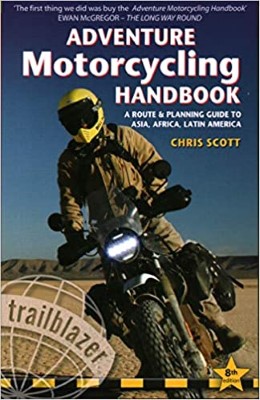
2020 Edition of Chris Scott's Adventure Motorcycling Handbook.
"Ultimate global guide for red-blooded bikers planning overseas exploration. Covers choice & preparation of best bike, shipping overseas, baggage design, riding techniques, travel health, visas, documentation, safety and useful addresses." Recommended. (Grant)
Ripcord Rescue Travel Insurance™ combines into a single integrated program the best evacuation and rescue with the premier travel insurance coverages designed for adventurers.
Led by special operations veterans, Stanford Medicine affiliated physicians, paramedics and other travel experts, Ripcord is perfect for adventure seekers, climbers, skiers, sports enthusiasts, hunters, international travelers, humanitarian efforts, expeditions and more.
Ripcord travel protection is now available for ALL nationalities, and travel is covered on motorcycles of all sizes!
What others say about HU...
"This site is the BIBLE for international bike travelers." Greg, Australia
"Thank you! The web site, The travels, The insight, The inspiration, Everything, just thanks." Colin, UK
"My friend and I are planning a trip from Singapore to England... We found (the HU) site invaluable as an aid to planning and have based a lot of our purchases (bikes, riding gear, etc.) on what we have learned from this site." Phil, Australia
"I for one always had an adventurous spirit, but you and Susan lit the fire for my trip and I'll be forever grateful for what you two do to inspire others to just do it." Brent, USA
"Your website is a mecca of valuable information and the (video) series is informative, entertaining, and inspiring!" Jennifer, Canada
"Your worldwide organisation and events are the Go To places to for all serious touring and aspiring touring bikers." Trevor, South Africa
"This is the answer to all my questions." Haydn, Australia
"Keep going the excellent work you are doing for Horizons Unlimited - I love it!" Thomas, Germany
Lots more comments here!

Diaries of a compulsive traveller
by Graham Field
Book, eBook, Audiobook
"A compelling, honest, inspiring and entertaining writing style with a built-in feel-good factor" Get them NOW from the authors' website and Amazon.com, Amazon.ca, Amazon.co.uk.
Back Road Map Books and Backroad GPS Maps for all of Canada - a must have!
New to Horizons Unlimited?
New to motorcycle travelling? New to the HU site? Confused? Too many options? It's really very simple - just 4 easy steps!
Horizons Unlimited was founded in 1997 by Grant and Susan Johnson following their journey around the world on a BMW R80G/S.
 Read more about Grant & Susan's story
Membership - help keep us going!
Horizons Unlimited is not a big multi-national company, just two people who love motorcycle travel and have grown what started as a hobby in 1997 into a full time job (usually 8-10 hours per day and 7 days a week) and a labour of love. To keep it going and a roof over our heads, we run events all over the world with the help of volunteers; we sell inspirational and informative DVDs; we have a few selected advertisers; and we make a small amount from memberships.
You don't have to be a Member to come to an HU meeting, access the website, or ask questions on the HUBB. What you get for your membership contribution is our sincere gratitude, good karma and knowing that you're helping to keep the motorcycle travel dream alive. Contributing Members and Gold Members do get additional features on the HUBB. Here's a list of all the Member benefits on the HUBB.
|
|
|







 Re :
Re :
 Linear Mode


