




Indija, Vojvodina, Serbia Community
Indija, Vojvodina, Serbia

Serbia

Vojvodina Province, northern Serbia (north of Belgrade) - click for detailed enlargement of Indija area

Indija
From Igor Petrovic, Indija Community
(note the different spelling of Indija - or Indjija)
"Indjija is in between Novi Sad (Vojvodina's capital) and Belgrade (Serbia's capital), right on the road to Belgrade and very easy to find (lots of road signs - exit road sign, when exiting off 'motorway' (Subotica-Belgrade).
Indjija is a small town, aprox. 25000 residents, lots of infrastructure, 'fast' internet conection (aprox 15-20 KB/s,in internet cafe).
Indjija has nice motel, in quiet part of town, right beside a small Zoo, summer olympic swiming pool, natural hot water spring (spa) wich shoots water 3-4 meters in air."
Some historical info from Encarta:
"Most of Vojvodina, a province in northern Serbia in the Federal Republic of Yugoslavia, lies on the fertile Pannonian Basin. The Fruska Gora Ridge reaches an elevation of 593 metres (1,946 feet) in the southwest corner of the province. The southern Carpathian Mountains cross the southwest, rising to 641 metres (2,103 feet), and the Danube and Tisza rivers flow through the region. Vojvodina is bordered on the north by Hungary, on the west by Croatia, on the east by Romania, and on the south by the Serbian region of Sumadija.
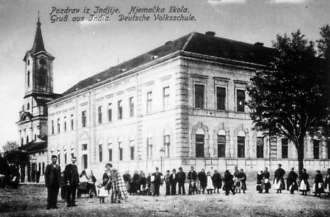
Early twentieth century GermanSchool and Catholic Church.
Vojvodina offers some of the richest agricultural land in Serbia. Major crops include wheat, maize, and sugar beet. Livestock raising, horticulture, and grape cultivation are also important. Oil and gas deposits are found in eastern Vojvodina. The economy has traditionally benefitted from commercial navigation on the Danube, but this activity was somewhat curtailed by the United Nations (UN) embargo against the Federal Republic of Yugoslavia and the other warring countries of the former Yugoslavia in place since May 1992. The removal of the embargo following the November 1995 Dayton agreement was welcomed, but it is uncertain whether this will translate into an improvement of economic prospects.
Novi Sad, an important port on the Danube, is the capital of Vojvodina. More than 60 per cent of the population of the province are ethnic Serbs. Ethnic Hungarians, comprising about 17 per cent of the population, are the second largest nationality group. Ethnic Croats, Czechs, Slovaks, and Ruthenes also live in the region.
Vojvodina was home to various peoples in ancient times, and in the 6th century AD there were successive waves of immigration by the Lombards, Avars, and Slavs. In the late 9th century Magyars entered the Pannonian Basin from the northeast and settled in the region, which became part of the Kingdom of Hungary. In 1690 thousands of Serbs migrated from Ottoman lands in the south to Vojvodina, which by this time was part of the extensive Habsburg empire. Devastated by recurrent warfare, Vojvodina had no more than 100,000 inhabitants at the beginning of the 18th century. To repopulate the region, Habsburg authorities established a large German colony and encouraged Serbs and Croats to settle there.
In 1918 Vojvodina was annexed to the emergent Kingdom of the Serbs, Croats, and Slovenes, which was later renamed Yugoslavia. Yugoslav President Josip Broz Tito established Vojvodina as an autonomous province within the Republic of Serbia in 1946, in recognition of Vojvodina's separate history and distinct cultural traditions.
© & (p) 1995-2000 Microsoft Corporation. All rights reserved."
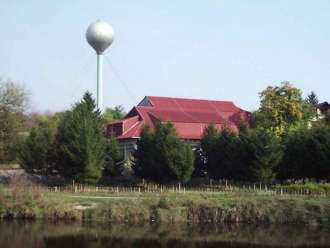
Motel Lovac

Links to more information
The Book of Home: Serbia and Montenegro
A wealth of information about the Federal Republic of Yugoslavia; some available in the local languages only
National Tourism Organisation of Serbia
Yugoslav Automotive Association
"Auto-Moto Savez Jugoslavije"
Encarta Online—Yugoslavia
Comprehensive information about the country’s history, culture, and economy
Serbian Unity Congress
A daily review of news from Serbia, as well as information about culture and society
World Factbook—Serbia
Concise economic, geographical, and population data from the United States Central Intelligence Agency
Accommodation
Hotels in Yugoslavia (Serbia and Montenegro) - Yugoslavia hotel guide

Global Rescue is the premier provider of medical, security and evacuation services worldwide and is the only company that will come to you, wherever you are, and evacuate you to your home hospital of choice.
Additionally, Global Rescue places no restrictions on country of citizenship - all nationalities are eligible to sign-up! Travel medical insurance is also available, currently the limit is 90 days. (TIP: For Evac insurance - Click Multiple Trips and 365 days to get year long insurance.)

Ripcord Rescue Travel Insurance™ combines into a single integrated program the best evacuation and rescue with the premier travel insurance coverages designed for adventurers.
Led by special operations veterans, Stanford Medicine affiliated physicians, paramedics and other travel experts, Ripcord is perfect for adventure seekers, climbers, skiers, sports enthusiasts, hunters, international travelers, humanitarian efforts, expeditions and more.
Ripcord travel protection is now available for ALL nationalities, and travel is covered on motorcycles of all sizes! NOTE: Travel medical insurance currently has a limit of 90 days.
Member login
Announcements
Thinking about traveling? Not sure about the whole thing? Watch the HU Achievable Dream Video Trailers and then get ALL the information you need to get inspired and learn how to travel anywhere in the world!
Have YOU ever wondered who has ridden around the world? We did too - and now here's the list of Circumnavigators!
Check it out now, and add your information if we didn't find you.
Are you an Overland Adventure Traveller?
Does the smell of spices wafting through the air make you think of Zanzibar, a cacophony of honking horns is Cairo, or a swirl of brilliantly patterned clothing Guatemala? Then this is the site for you!
Hosted by Grant and Susan Johnson, RTW 1987-1998
Next HU Events

HU Event and other updates on the HUBB Forum "Traveller's Advisories" thread.
ALL Dates subject to change.
2024:
- California: April 18-21
- Virginia: April 25-28
- Germany Summer: May 9-12
- Québec: May 17-19
- Bulgaria Mini: July 5-7
- CanWest: July 11-14
- Switzerland: August 15-18
- Romania: August 30-Sept 1
- Ecuador: August 24-25
- Austria: September 12-15
- France: September 20-22
- Queensland is back! Oct 4-7
- Germany Autumn: Oct 31-Nov.3
- South Africa: November
Add yourself to the Updates List for each event!
Questions about an event? Ask here
HU Achievable Dream is Online
and available now to stream on Vimeo!
ALL 15 chapters of the HU Achievable Dream Guide are available to download on Vimeo!

Binge watch over 18 hours of inspiring, informative and entertaining stories and tips from 150 travellers!
"a cross between entertaining stories, tech tips, and reference guide"
"A timeless introduction to Motorcycle Adventure Travel!"
Originally launched as a 7 DVD set, The Achievable Dream series can now be downloaded anywhere. OVER 18 hours of solid info take up zero space in your panniers. How convenient!
Books

All the best travel books and videos listed and often reviewed on HU's famous Books page. Check it out and get great travel books from all over the world.
NOTE: As an Amazon Affiliate we earn from qualifying purchases - thanks for your help supporting HU when you start from an HU Amazon link!